
It has been over five years since I joined HRchitect, and it is rewarding to reflect on my journey as an HCM Consultant. Here’s why I’ve come to truly love what I do.
In October 2021, I joined a company of about 30 people after years of working inside a large organization. I had a laptop, some online trainings, a new email address, and a Slack workspace full of people I hadn’t yet earned the right to annoy with questions.
That was it.
The culture shock of moving to a comparatively small organization hit me harder than I expected. Harder, honestly, than starting my first job out of college. At a big company, when you don’t know something, you walk down the hall. You knock on a door. You find the person who has done it before, and you ask. That safety net was gone. And I had to quickly realize that if things were going to get done, it would be because I found a way to get them done.
The most important skill I had to build wasn’t technical competency. It was learning to trust myself in the absence of a familiar system to lean on.
When the Guardrails disappear
HRchitect ensured my training was up to date, and my first project challenged me with a tried-and-true methodology that was new to me. What I did have was prior experience solving problems and recognizing problems I had never seen in exactly that form.
Trusting my expertise in designing a solution for a client operating across multiple countries, needing a configuration specific enough to solve their challenges yet flexible enough that a single change could ripple through the whole system sensibly. There was no playbook for it. I just had to step up and bring my training and experience.
What I’ve come to realize, looking back, is that the discomfort of that season was the whole point. You don’t know what you’re capable of until the familiar structures you’ve relied on are no longer there. The difficulty wasn’t a sign that something had gone wrong. It was the process. And I was up for the challenge; in fact, that is when I learned how much I loved my job.
Trust is built in the hard moments, not the easy ones
Some of the most meaningful times I’ve had in my career have happened well past midnight, troubleshooting a cutover for a major go-live.
Not because it was glamorous, but because there were HR leaders on the other end of that call, counting on us to hold the line. Those moments don’t feel like work in the traditional sense. They feel like commitment. And the trust you build in those situations, between project teammates, between you and your client, that is different.
It’s forged under pressure. And it lasts.
Survival skills
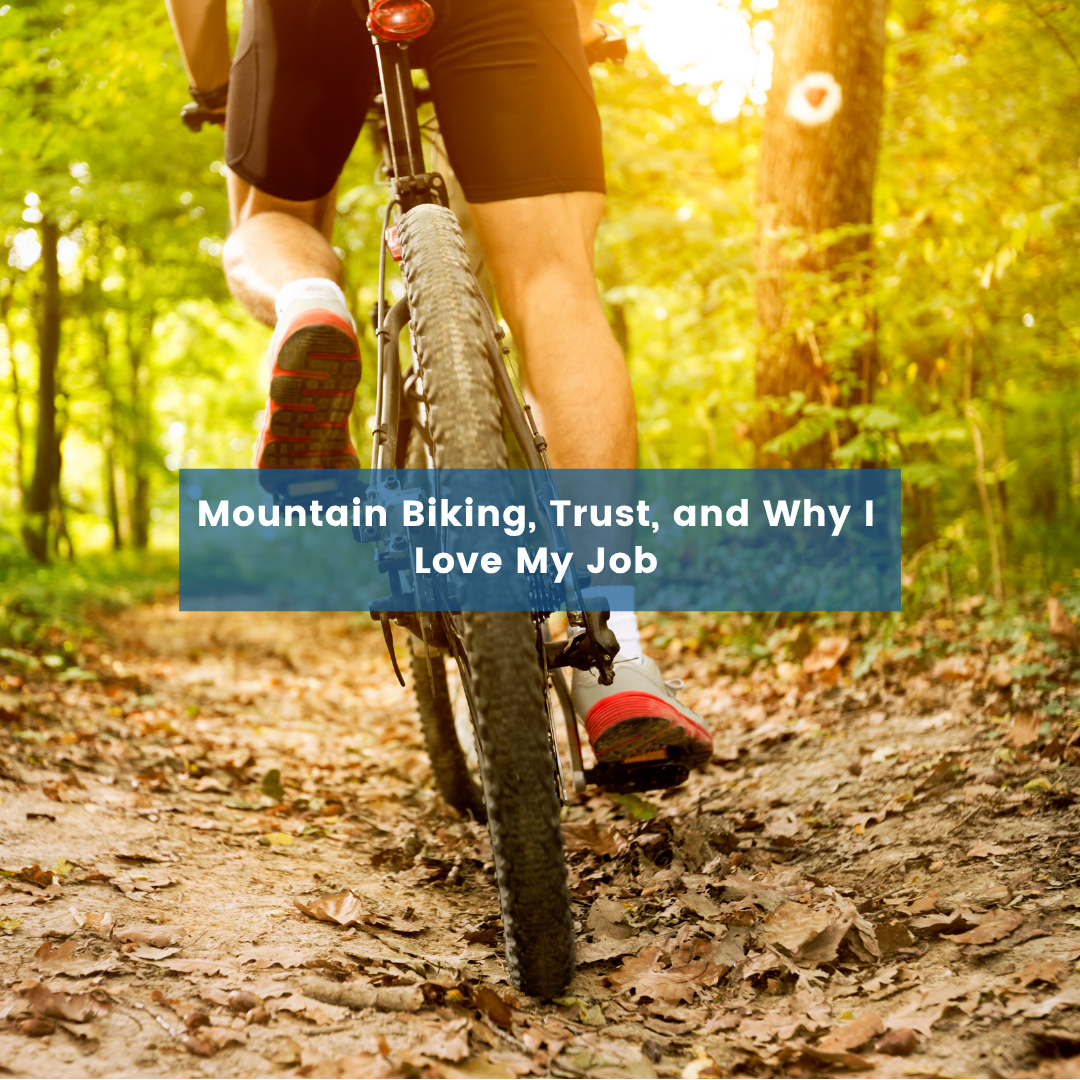
Outside of work, I mountain bike, mostly in Arizona. If you’ve ridden here, you know what that means. There are big rocks, cacti, and the occasional rattlesnake coiled up just off the trail. It’s a sport that forces you to look forward. Not at your front wheel. Not at the rock you’re already on. Forward, to the next obstacle, the next drop, the next decision point.
When you’re learning something new and scary on a mountain bike, the best thing you can do is follow someone who’s done it before. Not because they’ll do it for you, but because watching them choose the line removes some of the unknown. You see where they put their weight. You see how they commit.
Then it’s your turn.
Looking forward isn’t optimism. It’s a survival skill, on the trail and on a project.
I think about that a lot when I reflect on how I approach my work. The instinct to freeze in front of a hard problem, to look only at where you are rather than where you’re going, is natural. But it’s also how you get hurt. The skill isn’t eliminating that instinct. It’s training yourself to override it. To look up, research the problem, and commit to the solution.
Reflections
The version of me that walked into that small company with a laptop and a lot of questions needed to hear this: the disorientation you’re feeling isn’t incompetence. It’s recalibration. Your skills are there. Your judgment is sound. You just gain confidence in it before you have proof that you should.
That’s the hardest kind of trust. And it’s also the most important kind to develop. And the most important thing is that it leads you to new levels.
As a leader in our UKG Pro WFM consulting practice, I think about this when I see a newer consultant hit that same wall. Part of my role now is being the person I needed back then, not handing them answers but helping them trust that they already have the tools to find their own.
Working at HRchitect and the latitude they give me to learn, follow my instincts, and lead have enabled a kind of personal growth I did not imagine when I joined the company.
About the Author
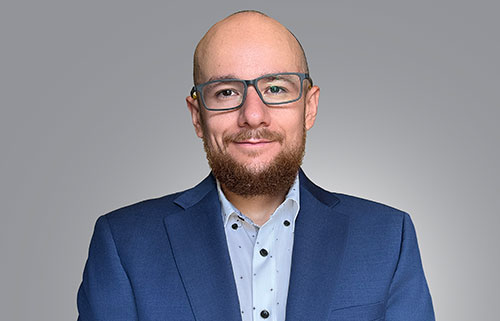
As an Implementation Manager, Diego Navez has spent over five years helping HRchitect clients navigate one of the most human parts of WFM technology: the moment when a system goes live, and real people have to trust it. Diego guides clients through every phase of workforce management projects, with a particular focus on what happens after go-live, when the real work of adoption begins.
When he’s not untangling complex pay rules or leading a midnight cutover, you’ll find him on a mountain bike somewhere in the Arizona desert, still looking forward, still picking his line.
Learn more about Diego on LinkedIn and reach out if you and your organization can benefit from HRchitect’s 29+ years of WFM technology experience.