

Your organization is undertaking a change initiative in support of the implementation of a new HCM. A change consultant will lead the team using best practices, a structured approach to measuring change, and methodologies to support the team and organization through this significant change. Other important events where you might want to consider change management include restructuring due to a merger or acquisition, major process reengineering or significant cultural shifts within the company or a specific division.
Unlike a project, a change initiative does not end at go-live or when officially closed. Instead, a change initiative marks the beginning of new ways of working. That means the change has just begun. When changes are implemented, it is essential to evaluate the progress to understand if the intended future state is taking place. It Is crucial to identify the right metrics and create a strategy to collect the data needed to measure the performance and the results. Having the correct data will highlight the value of your change management investment and its direct correlation to the overall success of the project or change initiative.
What does it mean to measure change, and why is it important?
Estimating the benefits of change management through the ROI (Return on Investment) can be challenging. It requires tying factors such as the adoption of the change, organizational mindsets, and employee behaviors to metrics, not just the actual costs from a project budget perspective. Therefore, measuring success through these metrics can be more complex. However, it is essential to consider that the lack of adoption can impact an organization’s bottom line over time if the system capabilities or business processes are not used as intended. How do you determine if the level of adoption you need has been achieved? A shared vision of what the organization needs to achieve, and the benefits desired determines the change initiative’s definition of success.
Who should help determine what change metrics to use?
Measuring adoption and other success factors should be done through a series of change metrics identified in the planning phase of the change management initiative. By this time, you understand the goals and objectives of the project or change initiative, and the business case is defined. The next step would be to identify who you should brainstorm with to align on what metrics to adopt. A solid measurement plan will increase buy-in and commitment to the importance and value of the change management initiative.
The change management team should partner with key business leaders and other appropriate resources to align on what success looks like. This group should define success by asking the following questions:
- What will the future state look like? How can you define it?
- What key measurements define the ROI?
- How will you measure each of these critical items?
- Concerning ROI, what is the value and weight of each measurement?
- How do we utilize the results going forward?
A sound definition of the future state of work and a corresponding measurement plan will provide the blueprint for your organization’s new ways of working. A plan includes what to assess and monitor and when to execute each metric throughout the project or change initiative. Establish your measurement plan, then review it against the business case with your sponsor, executive leaders, and project team. Be sure to get approval and sign off.
How to measure effective change and adoption.
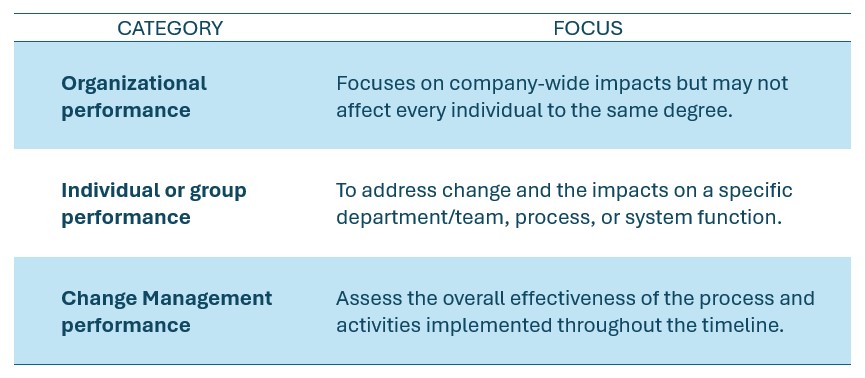
The measurements you have identified should evaluate three categories: the organization, impacted individuals or groups, and the overall change management plan.
The focus for each category is described below:
Once the key metrics are defined, tools for collecting data can be determined, such as system reports, surveys, or focus groups. It is essential to ensure the proper mechanisms and frequency to collect the data are in place to provide the most value to your organization.
Assessing the change metrics throughout the lifecycle of the project or change initiative will provide valuable insights to gauge adoption, identify potential areas of concern, and the overall effectiveness of change management. These results should be analyzed and shared with your executive leadership, stakeholders, and project team – allowing them to make proactive data-driven decisions and adjust the change management approach as needed.
Effective measurement can improve adoption
Remember that there is no one-size-fits-all approach to measuring the success of a change initiative. Not only is every organization different, but even the projects or change initiatives within an organization are different and vary in scope. The goal is to understand the future state and the new way of working desired, measure the change through critical metrics, and increase the likelihood of success by comparing them against the business goals and ROI. A well-run, key metric-driven change initiative can meet or exceed ROI expectations and significantly improve adoption.
At HRchitect, we understand how effective a change management initiative can be as part of an HCM Implementation or as a stand-alone service when your organization faces substantial change. Are you concerned that your organization is not ready to adopt these changes? Our change management professionals can help by leading your organization through a structured process to ensure measurable success. Contact us today to find out more about how a change initiative can increase your chances of success.
About the Author

Priscilla Sparrow is a Senior Change Management Consultant with over nine years of experience. Priscilla specializes in developing and implementing practical tools and best practices that foster employee engagement, drive adoption and support organizational goals through change management.
To learn more about Priscilla, check out her LinkedIn page.